1 Logical Architecture의 정의
Logical Architecture는 Conceptual Architecture를 구체화한 설계 계층으로, 여전히 기술 스택 독립적이지만 구현 수준의 세부사항을 포함한다.
핵심 특징:
- 기술 중립적: 특정 도구나 프로그래밍 언어를 명시하지 않음
- 구현 지향적: 실제 개발에 필요한 모듈, 인터페이스, 데이터 구조 정의
- 상세한 데이터 흐름: 각 단계에서의 입출력 데이터 명시
- 모듈 간 계약: API 계약, 데이터 형식, 상태 관리 정의
- 확장성과 유지보수성: 향후 기술 변경 시 영향을 최소화
1.1 Conceptual vs Logical vs Physical 비교
| 측면 | Conceptual | Logical | Physical |
|---|---|---|---|
| 추상화 수준 | 매우 높음 | 중간 | 낮음 |
| 기술 명시 | 없음 | 없음 (독립적) | 구체적 |
| 대상 청중 | 모든 이해관계자 | 개발팀, 아키텍트 | 개발팀 |
| 초점 | “무엇을” | “어떻게” (기술 중립) | “무엇으로” |
| 예시: 데이터 저장 | “저장소” | “Relational DB + Cache Layer” | “PostgreSQL + Redis” |
2 Logical Architecture 설계 단계
2.1 Conceptual Architecture 재검토
Logical 설계를 시작하기 전에:
- 각 컴포넌트의 책임 명확화
- 데이터 입출력 재확인
- 성능 요구사항 파악 (처리량, 지연시간)
- 확장성 요구사항 정의 (수평/수직 확장 가능성)
2.2 모듈 분해 (Module Decomposition)
각 Conceptual 컴포넌트를 논리적 모듈로 세분화한다.
원칙:
- 단일 책임: 각 모듈은 하나의 명확한 역할
- 높은 응집도: 관련 기능을 한 모듈에 그룹화
- 낮은 결합도: 모듈 간 의존성 최소화
예시: 데이터 Ingestion 컴포넌트 분해
Conceptual: "Data Ingestion"
     ↓
Logical Modules:
  ├── Source Connector (다양한 소스 연결)
  ├── Data Validator (데이터 검증)
  ├── Data Transformer (형식 변환)
  └── Error Handler (오류 처리 및 재시도)
2.3 데이터 구조 정의
각 모듈 간에 주고받는 데이터 형식을 정의한다.
정의 내용:
- 데이터 엔티티: 주요 데이터 객체의 구조
- 메타데이터: 데이터 출처, 생성 시간, 버전 등
- 상태 정보: 처리 상태, 에러 정보
예시 데이터 구조:
Raw Data Input:
{
  source_id: string,
  content: bytes,
  mime_type: string,
  timestamp: datetime,
  metadata: object
}

Validated Data:
{
  validated_content: string,
  validation_status: "SUCCESS" | "WARNING" | "FAILED",
  issues: list[ValidationIssue],
  processed_timestamp: datetime
}

Transformed Data:
{
  standardized_format: object,
  schema_version: string,
  transformation_rules: list[string],
  data_quality_score: float
}
2.4 모듈 간 인터페이스 정의
API 계약 정의: 각 모듈이 받고 내보내는 데이터와 동작
Module: SourceConnector
Input: ConnectionConfig
Output: RawDataStream
Operations:
  - connect(config) -> Connection
  - fetch(query) -> RawData[]
  - disconnect() -> void
  - on_error(handler) -> void

Module: DataValidator
Input: RawData
Output: ValidationResult
Operations:
  - validate(raw_data) -> ValidationResult
  - get_schema() -> DataSchema
  - register_validator(validator_func) -> void
2.5 상태 관리 및 흐름 제어
각 단계에서의 상태 전이를 정의한다.
Processing Pipeline States:

INITIATED → INGESTING → VALIDATING → TRANSFORMING → STORING → COMPLETED
              ↓            ↓            ↓             ↓
            FAILED (any stage)
              ↓
            ERROR_HANDLING
              ↓
            RETRY or ABANDONED
3 Logical Architecture 표현 방법
3.1 계층 아키텍처 다이어그램
┌─────────────────────────────────────────────────────────────┐
│                      Presentation Layer                     │
│  ┌──────────────┐  ┌──────────────┐  ┌──────────────┐      │
│  │Chat Interface│  │    API       │  │  Dashboard   │      │
│  └──────┬───────┘  └──────┬───────┘  └──────┬───────┘      │
└─────────┼─────────────────┼─────────────────┼──────────────┘
          │                 │                 │
┌─────────┴─────────────────┴─────────────────┴──────────────┐
│                    Application Layer                       │
│  ┌──────────────────────────────────────────────────────┐  │
│  │         Request Handler / Orchestration Layer        │  │
│  └────────┬────────────────────────────────────────┬────┘  │
└───────────┼────────────────────────────────────────┼────────┘
            │                                        │
┌───────────┴────────────────────────────────────────┴────────┐
│                   Business Logic Layer                      │
│  ┌──────────────┐  ┌──────────────┐  ┌──────────────┐     │
│  │Query Engine  │  │Retrieval Mgr │  │Response Gen  │     │
│  └──────┬───────┘  └──────┬───────┘  └──────┬───────┘     │
└─────────┼─────────────────┼─────────────────┼──────────────┘
          │                 │                 │
┌─────────┴─────────────────┴─────────────────┴──────────────┐
│                   Data Layer                               │
│  ┌──────────────┐  ┌──────────────┐  ┌──────────────┐     │
│  │Vector Store  │  │Data Cache    │  │Metadata DB   │     │
│  │Repository    │  │Layer         │  │Repository    │     │
│  └──────────────┘  └──────────────┘  └──────────────┘     │
└─────────────────────────────────────────────────────────────┘
3.2 모듈 상호작용 다이어그램
┌─────────────────────────────────────────────────────────────┐
│              Logical Module Interaction                      │
└─────────────────────────────────────────────────────────────┘

User Query
    │
    ▼
┌──────────────────────┐
│ Request Dispatcher   │ ◄── Routes request to appropriate handler
└──────────┬───────────┘
           │
    ┌──────┴──────┐
    │             │
    ▼             ▼
┌─────────────┐ ┌─────────────────────┐
│Query Parser │ │Intent Classifier    │
└──────┬──────┘ └──────────┬──────────┘
       │                   │
       └───────┬───────────┘
               ▼
        ┌──────────────┐
        │Query Encoder │ ◄── Convert to vector representation
        └──────┬───────┘
               │
               ▼
        ┌──────────────────────┐
        │Vector Search Engine  │ ◄── Query against vector store
        └──────┬───────────────┘
               │
        ┌──────┴──────────────────┐
        │                         │
        ▼                         ▼
    ┌─────────────┐        ┌──────────────┐
    │Vector Store │        │Metadata Repo │ ◄── Fetch context
    └─────────────┘        └──────────────┘
        │                         │
        └──────┬──────────────────┘
               ▼
        ┌──────────────────────┐
        │Context Aggregator    │ ◄── Combine retrieved info
        └──────┬───────────────┘
               │
               ▼
        ┌──────────────────────┐
        │Reasoning Engine      │ ◄── Apply business logic
        └──────┬───────────────┘
               │
               ▼
        ┌──────────────────────┐
        │Response Composer     │ ◄── Format response
        └──────┬───────────────┘
               │
               ▼
        ┌──────────────────────┐
        │Output Formatter      │ ◄── Prepare for delivery
        └──────┬───────────────┘
               │
               ▼
            Response
3.3 데이터 흐름 및 상태 다이어그램
Data Processing Pipeline - Logical View

Source Data
    │
    ▼
┌──────────────────────────────────┐
│ Source Connector                 │
│ (Read from various sources)      │
│ Status: CONNECTING → READING     │
└──────────┬───────────────────────┘
           │ RawDataStream
           ▼
┌──────────────────────────────────┐
│ Data Validator                   │
│ (Schema check, completeness)     │
│ Status: VALIDATING               │
└──────────┬───────────────────────┘
           │
      ┌────┴────┐
      │          │
      ▼ PASS     ▼ FAIL
   ┌────┐    ┌──────────────┐
   │    │    │Error Handler │
   │    │    └──────────────┘
   │    │
   ▼    │ (retry or skip)
┌──────────────────────────────────┐
│ Data Transformer                 │
│ (Normalize, enrich, clean)       │
│ Status: TRANSFORMING             │
└──────────┬───────────────────────┘
           │ TransformedData
           ▼
┌──────────────────────────────────┐
│ Embedding Generator              │
│ (Create vector representations)  │
│ Status: EMBEDDING                │
└──────────┬───────────────────────┘
           │ (Data + Embeddings)
           ▼
┌──────────────────────────────────┐
│ Storage Coordinator              │
│ (Write to appropriate stores)    │
│ Status: STORING                  │
└──────────┬───────────────────────┘
           │
        ┌──┴──┬────────┐
        ▼     ▼        ▼
   ┌─────┐ ┌────┐ ┌────────┐
   │Vector│ │Text│ │Metadata│
   │Store │ │ DB │ │  DB    │
   └─────┘ └────┘ └────────┘

Status: COMPLETED
3.4 시퀀스 다이어그램 (특정 시나리오)
User        Request      Query        Vector      Storage
            Dispatcher   Processor    Search      Layer
 │              │            │          │           │
 │─query──────▶│             │          │           │
 │              │─parse─────▶│          │           │
 │              │            │─encode──▶│           │
 │              │            │          │─search──▶│
 │              │            │          │◀─results─│
 │              │◀───────────┼──────────┤          │
 │◀────response─│            │          │          │
 │              │            │          │          │
4 실제 예시: RAG 시스템의 Logical Architecture
4.1 Conceptual에서 Logical로의 전환
Conceptual Components → Logical Modules

1. Data Ingestion
   └─ Logical Modules:
      ├── SourceConnector
      ├── DocumentParser
      ├── ImageAnalyzer
      └── DataValidator

2. Storage Repository
   └─ Logical Modules:
      ├── TextRepository
      ├── VectorRepository
      ├── MetadataRepository
      └── CacheLayer

3. Retrieval Engine
   └─ Logical Modules:
      ├── QueryEncoder
      ├── VectorSearcher
      ├── TextSearcher
      ├── ResultRanker
      └── ContextAggregator

4. Response Generation
   └─ Logical Modules:
      ├── ReasoningEngine
      ├── ResponseComposer
      └── OutputFormatter

5. User Interface
   └─ Logical Modules:
      ├── APIGateway
      ├── ChatInterface
      └── DashboardService
4.2 프로젝트 예시
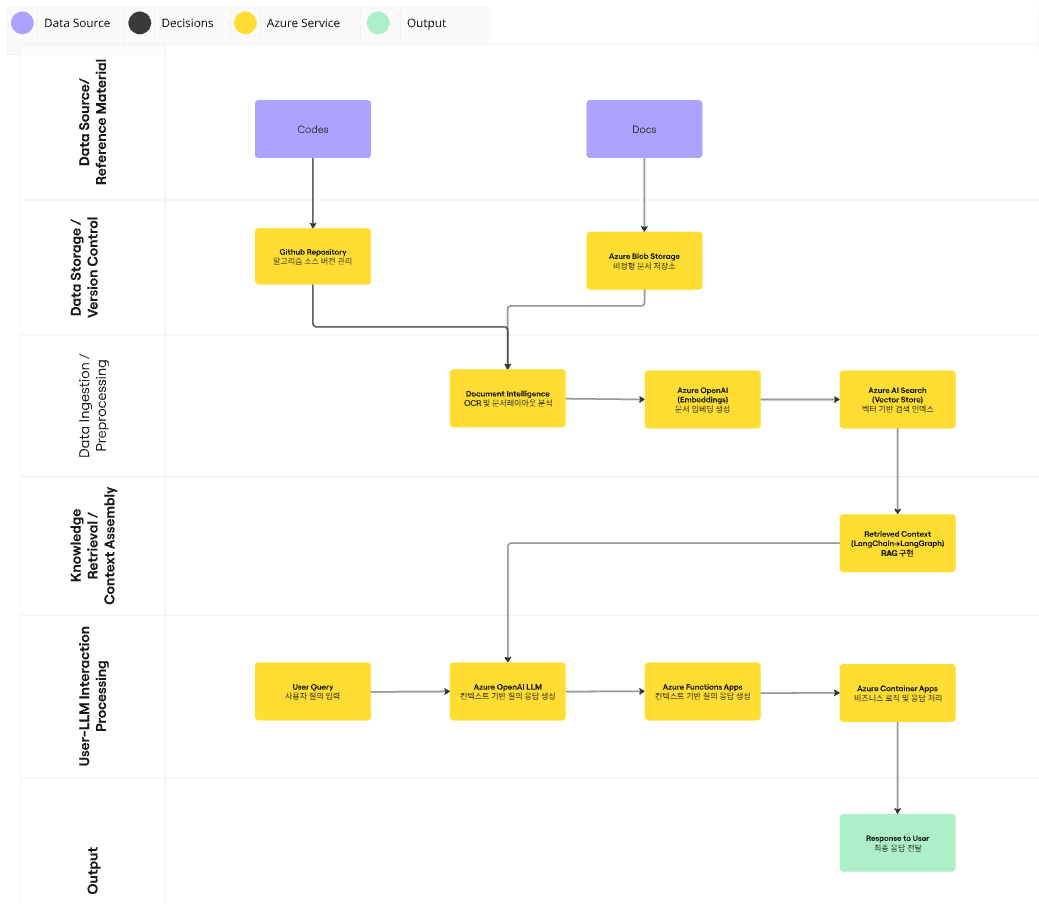
4.3 핵심 모듈 정의
Module: SourceConnector
Responsibility: 다양한 소스에서 원본 데이터 수집

Input Configuration:
{
  source_type: "github" | "local_files" | "api",
  source_path: string,
  filter_rules: list[FilterRule],
  batch_size: integer
}

Output Stream:
RawDataItem {
  id: string (unique identifier),
  content: bytes,
  source: string,
  mime_type: string,
  timestamp: datetime,
  metadata: object
}

Key Operations:
  - open_connection(config) → Connection
  - read_batch() → RawDataItem[]
  - close_connection() → void

Error Handling:
  - Connection failures → Retry with backoff
  - Incomplete reads → Queue for retry
  - Invalid data → Log and continue
Module: VectorSearcher
Responsibility: 의미 기반 벡터 검색

Input Query:
{
  query_vector: float[],    // embedding representation
  top_k: integer,           // number of results
  filters: object,          // optional metadata filters
  similarity_threshold: float
}

Output Results:
SearchResult {
  id: string,
  content: string,
  similarity_score: float,  // 0.0 to 1.0
  metadata: object,
  rank: integer
}

Key Operations:
  - index_vectors(vectors: Vector[]) → void
  - search(query_vector, top_k) → SearchResult[]
  - filter_results(results, filters) → SearchResult[]

Performance Requirements:
  - Latency: < 100ms per query
  - Throughput: 1000 queries/sec
Module: ResponseComposer
Responsibility: 관련 정보를 바탕으로 자연어 응답 생성

Input Context:
{
  user_query: string,
  retrieved_contexts: list[Context],  // Retrieved from search
  reasoning_result: object,
  response_style: "summary" | "detailed" | "structured"
}

Output Response:
{
  response_text: string,
  confidence_score: float,
  sources_cited: list[Source],
  follow_up_questions: list[string]
}

Key Operations:
  - compose_response(context, style) → Response
  - rank_context_by_relevance(contexts) → Context[]
  - generate_citations(contexts) → Citation[]

Quality Metrics:
  - Response coherence
  - Source relevance
  - Citation accuracy
4.4 모듈 간 인터페이스
Interface: DataStream
from Module: SourceConnector
to Module: DataValidator

Protocol: Streaming (async pull-based)

Message Format:
{
  id: string,
  data: bytes,
  metadata: {
    source: string,
    timestamp: datetime,
    chunk_size: integer
  }
}

Error Handling:
- On validation failure → Send to ErrorHandler
- On timeout → Retry or abandon
Interface: SearchQuery
from Module: QueryEncoder
to Module: VectorSearcher

Protocol: Request-Response (sync)

Request:
{
  query_embedding: float[],
  top_k: integer = 10,
  filters: object = {}
}

Response:
{
  status: "success" | "error",
  results: SearchResult[],
  query_time_ms: integer,
  result_count: integer
}
5 Logical Architecture 설계 체크리스트
설계 완료 전에 확인할 사항:
5.1 모듈 설계
5.2 데이터 구조
5.3 인터페이스 및 계약
5.4 성능 및 확장성
5.5 신뢰성 및 복구력
5.6 보안
6 Logical Architecture 문서화
6.1 필수 문서 요소
1. Architecture Overview Diagram
   - 모든 모듈 시각화
   - 모듈 간 관계

2. Module Specification
   - 각 모듈의 책임
   - 입출력 데이터 정의
   - 주요 알고리즘/로직

3. Interface Definition
   - 모듈 간 API 계약
   - 데이터 형식 스키마
   - 통신 프로토콜

4. Data Flow Diagrams
   - 주요 시나리오별 흐름
   - 상태 전이
   - 에러 흐름

5. Non-Functional Requirements
   - 성능: 지연시간, 처리량
   - 확장성: 동시성, 데이터 크기
   - 신뢰성: 가용성, 복구 시간
   - 보안: 암호화, 접근 제어

6. Deployment Considerations
   - 모듈 배포 단위
   - 의존성 관리
   - 버전 호환성
6.2 문서 템플릿
[입력 데이터 구조]
## Output[출력 데이터 구조]
## Key Operations
- [Operation 1]: [설명]
- [Operation 2]: [설명]

## Dependencies
- [Dependency 1]
- [Dependency 2]

## Error Handling
- [Error Scenario 1]: [대응 방식]
- [Error Scenario 2]: [대응 방식]

## Performance Requirements
- Latency: [목표값]
- Throughput: [목표값]

## Scalability
- Horizontal: [가능 여부]
- Vertical: [가능 여부]

## Testing Strategy
- Unit tests: [테스트 항목]
- Integration tests: [테스트 항목]
7 Logical에서 Physical로의 전환
Logical Architecture가 완성되면 다음 단계:
구체화되는 항목:
Logical                          Physical
─────────────────────────────────────────────

VectorSearcher          →    Elasticsearch / FAISS / Milvus
MetadataRepository      →    PostgreSQL / MongoDB
CacheLayer              →    Redis / Memcached
ResponseComposer        →    Python FastAPI + Jinja2
APIGateway              →    Kong / AWS API Gateway
변화:
- 구체적 기술 스택 선택
- 인프라 배포 구조 정의
- 네트워킹, 리소스 할당
- CI/CD 파이프라인 설계
8 정리
Logical Architecture는:
- 기술 중립성 유지하면서도 구현 수준의 세부사항 정의
- 모듈화된 설계로 확장성과 유지보수성 확보
- 명확한 인터페이스 정의로 팀 간 커뮤니케이션 효율화
- 성능, 확장성, 신뢰성 요구사항을 구체적으로 반영
- Physical 설계를 위한 견고한 기반 제공
Conceptual → Logical → Physical 순서로 설계하면, 각 단계에서 기술적 결정의 이유를 명확히 할 수 있으며, 변경사항에 유연하게 대응할 수 있다.